

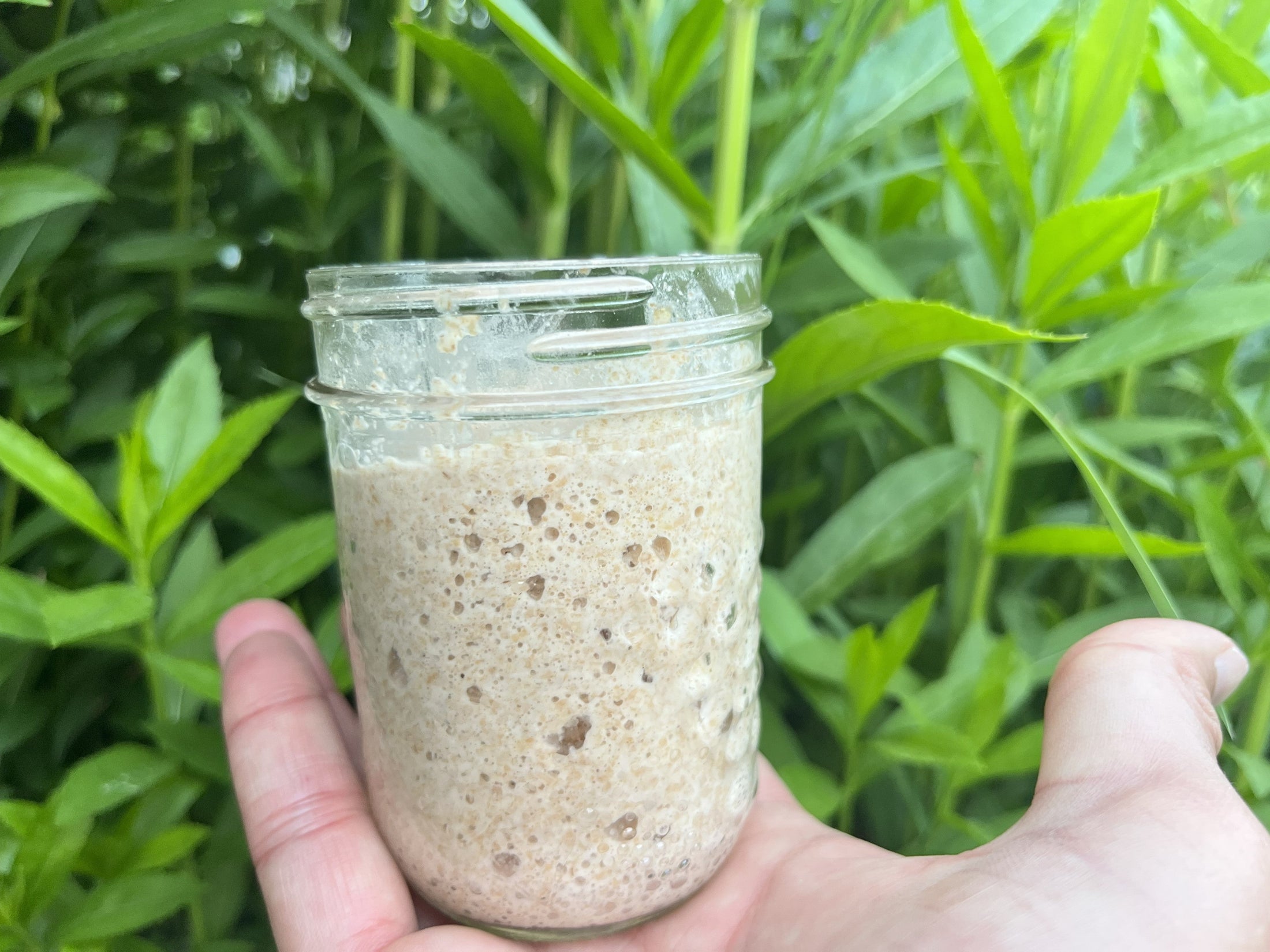
How do you capture the essence of a remote, beautiful place? That question led me to collect wild yeast from the forests near Ontario's highest point and eventually create a unique wild yeast sourdough starter. It also became the foundation of Lodestar Backcountry Provisions.
I was inspired by the work of another Ottawa group, Everyone Archives, and the concept (and name) resonated with me. We all archive the artifacts and experiences of our lives through pictures, videos, slides, saved trinkets. We do this to remember the people, places, and experiences that shape our lives and that round out who we are so that we can carry a piece of them with us.
I’ve spent my life visiting some wonderfully remote and off-the-beaten path places. My professional life has brought me all over the world, into many places that are outside the flight paths of commercial flights and require complicated logistics to reach them. I grew up on hiking trails and in the woods, and I love choosing a destination that’s remote and complex and figuring out the path to get there.
Some people call these places and experiences ‘being nowhere’. I love being nowhere.
But explaining the feeling of being in these remote, beautiful places to someone who’s never been there is far from straightforward. Pictures and videos don’t do justice to the feeling of standing on top of the highest point in Ontario, hundreds of kilometres from the closest person, staring at beautiful landscapes. Or the feeling of walking through remote fields and meadows. Or of being surrounded by the forest with all its smells and movements and shadows and dancing lights.
To try and capture this beauty and the essence of being in these wonderful places, I wanted to find a way of keeping them alive and with me. The idea of capturing wild yeast was perfect. Wild yeast is the foundation of every sourdough starter, driving fermentation alongside naturally occurring lactic acid bacteria that together create a living sourdough microbiome. Wild yeasts are everywhere in nature. They’re on berries and spruce tips and trees and floating through the air. Yeasts are not only alive and something that can be grown and sustained, they also shape the environments that they colonize. In sourdough bread, they are integral to the fermentation process, they change the sourdough microbiome makeup and change how the sourdough rises, its pH, and through these changes it indirectly alters how sourdough bread looks and tastes.
I wondered whether by introducing wild yeasts from the places I love that are impossible to describe, a wild yeast sourdough starter could become a way of experiencing a landscape and the feeling of being on the trail. Not by pretending you could taste a mountain, but by creating a direct, physical, and ongoing connection between a place and something you make at home. That idea eventually became Lodestar's dehydrated wild yeast sourdough starter, allowing anyone to revive and bake with a culture that began in the Canadian wilderness.
In the summer of 2025, I ran several experiments starting with a wild yeast water made with spring spruce tips that I added into a sourdough starter, to hikes to reach the highest point in New Brunswick (Mount Carleton) and to Ishpatina Ridge, the highest point in Ontario.
Meet Ishpatina, my wild yeast sourdough starter made using wild yeasts collected from the forests near Ishpatina Ridge.

Searching for the Wildest Places
If this experiment was going to work, the location mattered as much as the microbiology. I wanted somewhere wild, with a story, an adventure, that felt untouched.
Ishpatina Ridge rises above the forests of Northeastern Ontario, in Lady Evelyn–Smoothwater Provincial Park. At 693m above sea level, it isn’t an alpine peak by Canadian standards, but it is the highest natural point in the province. But it is far from a tourist destination. There is no parking lot, it’s hidden away inside of Lady Evelyn-Smoothwater Provincial Park (one of Ontario’s backcountry parks), and reaching it is complex and requires a lot of preparation. Depending on your route, you’re either in for a multi-day canoe trip, or you’ll spend hours driving logging roads, mountain biking, and hiking to the summit. You can read my trip report with advice for reaching it from the southern approach (driving, biking, and hiking) from my trip to the summit in 2025 in the Field Notes section.
Designing the Experiment
Collecting wild yeast for a sourdough starter is both straightforward and challenging. Wild yeast is everywhere, it floats through the air, clings to tree bark, and lives on wild berries. The challenge isn’t finding wild yeast, it’s collecting it without contaminating the sample.
I spent weeks trying different approaches to capturing it, finally settling on a combination of sterilized water, flour, and containers. I prepared a batch of sterile wild yeast traps in jars and sealed them until I was ready to capture wild yeasts.
The forests of northern Ontario weren’t my only destination in 2025 - I captured wild yeasts in the Gatineau hills in Quebec and in the forests of New Brunswick. Not all captured the yeasts I wanted or that could be used for making foods. The plan is simple in theory, but the simplicity also introduces a challenge: you open the containers and expose them to the air, allowing wild yeasts to settle in the sterile mix. But you get what you get, and not everything that colonizes the sterile mix can be used in food (or is food safe).
Turning to the Experts
There’s no guarantee that the yeasts (and bacteria) that settle in the sterile field will be useful or even safe. Importantly, I wanted a way of knowing what yeasts I had captured and a way of keeping them as pure as I could.
So, I turned to a food lab working with yeasts.
Lodestar’s wild yeast captures are all sent to a lab for analysis and, when food safe, propagation and storage. This is where the story meets science. Professional analysis verifies that my cultures contained viable yeasts that were foodsafe and helped me start to make sense of how I could work with them in my wild yeast sourdough starter recipes.
The Results
Not every sample succeeded. In fact, most failed either because of contamination or because they contained yeasts that weren’t food safe. All these samples were discarded by the lab.
But two cultures proved especially promising. Both were from the forests of northern Ontario, in the region near Ishpatina Ridge.
Laboratory analysis showed that my samples from near Ishpatina Ridge contained Metschnikowia pulcherrima and Hanseniaspora uvarum - two naturally occurring wild yeasts commonly associated with forests, fruit, and spontaneous fermentation.
These aren’t commercial yeasts that you find in supermarket packets, and they’re also not among the most common yeasts found in sourdough bread. These two wild yeasts are uncommon in sourdough baking but have both been identified in naturally fermented breads around the world, making them an unusual but scientifically documented foundation for a sourdough starter. They’re unusual and atypical, but they’re viable. They also behave differently than common sourdough yeasts.
The laboratory isolated, grew, and stabilized these yeasts for me so they could be reproduced consistently while preserving their original wild identity. These results were a huge relief - the experiment worked - not perfectly, but I had results. It was time to start experimenting.
From Expedition to Product
Finding these wild yeasts was only the beginning of creating a stable dehydrated sourdough starter that home bakers could reliably activate. I now needed to figure out how to create a sourdough starter with my wild yeast without creating an unbalanced microbial community (a sourdough starter microbiome is made up of yeasts and lactic acid bacteria that keep everything in balance). It meant working through recipes, adding in the right balance of my wild yeasts and figuring out what worked to keep the starters active and healthy.
This is probably the least romantic part of the story, testing recipes, documenting results, controlling variables to ensure a consistent and stable product. But through that work, your experience of the Canadian wilderness can begin where my ends.
Does the Bread Taste Like the Forest?
The truth is that no - it doesn’t taste like the forest.
But the wild forest yeasts change the way that the sourdough starter behaves which, in turn, changes how the sourdough bread rises and ferments, changing its flavour in different ways.
Sourdough bread flavour depends on countless factors, and yeast is only one of them. The flour you use, the temperature and humidity of your kitchen, the fermentation time, the yeasts in the air in your kitchen and environment, the lactic acid bacteria that become established in the sourdough’s microbiome - these are all part of the larger fermentation ecosystem and they all impact taste, flavour, and rise times.
The wild yeasts collected in the forests near Ishpatina Ridge are part of that living ecosystem, but they’re only one piece of a much larger story.
What you’re bringing home isn’t the flavour of the mountain, it’s a culture that began there. It’s a living connection to a place. It’s a story that continues to evolve (literally) in your kitchen as the sourdough microbial community begins with wild yeast from the forest, and changes and grows as yeast from your own kitchen joins and shapes it, too.
Why Place Matters
Building tangible connections to places is the underlying philosophy guiding Lodestar Backcountry Provisions. Every product begins with a wild Canadian place. Not an illustration, not imagined wilderness, but a real place that was visited, experienced, and remembered.
Lodestar Backcountry Provisions’ products are simply another way of continuing that experience.
Maybe that means baking bread with wild yeast collected from the forests near Ontario’s highest point. Future products are under development including immersive soundscapes that capture the sensory experience of immersing yourself in the soundbath of a forest. New wild yeast dehydrated sourdough starters are being planned for Ottawa’s urban forests, and wild destinations in Nova Scotia, New Brunswick, and Prince Edward Island.
The common thread is always the same: wild places worth experiencing and remembering.
Because I don’t think people are looking for more stuff. We’re looking for meaning in the places we visit, whether that’s a destination on a map or the experience of being nowhere.
Experience it Yourself
If you bake with Lodestar’s Ishpatina Wild Yeast Dehydrated Sourdough Starter, you’re participating in the experiment and an experience that began in a quiet patch of boreal forest hundreds of kilometres away.
Every sourdough you bake carries a part of that story. But this project isn’t really about selling products, it’s about encouraging people to experience Canada’s wild places for themselves.
Go to Ishpatina Ridge (here’s how). Stand beneath the fire tower, walk among the forests. Climb to the highest point in New Brunswick, explore the urban forests in your city.
Most sourdough starters begin in a kitchen. Ours begin with an expedition. Every Lodestar Wild Yeast Sourdough Starter starts with a real journey into a Canadian landscape, where wild yeasts are collected, identified by a laboratory, and transformed into a dehydrated sourdough starter that you can activate at home.
Do cool stuff, remember it, and archive it in a way that allows you to continue to experience it.