

How a spruce tip yeast water experiment became Lodestar Backcountry Provisions
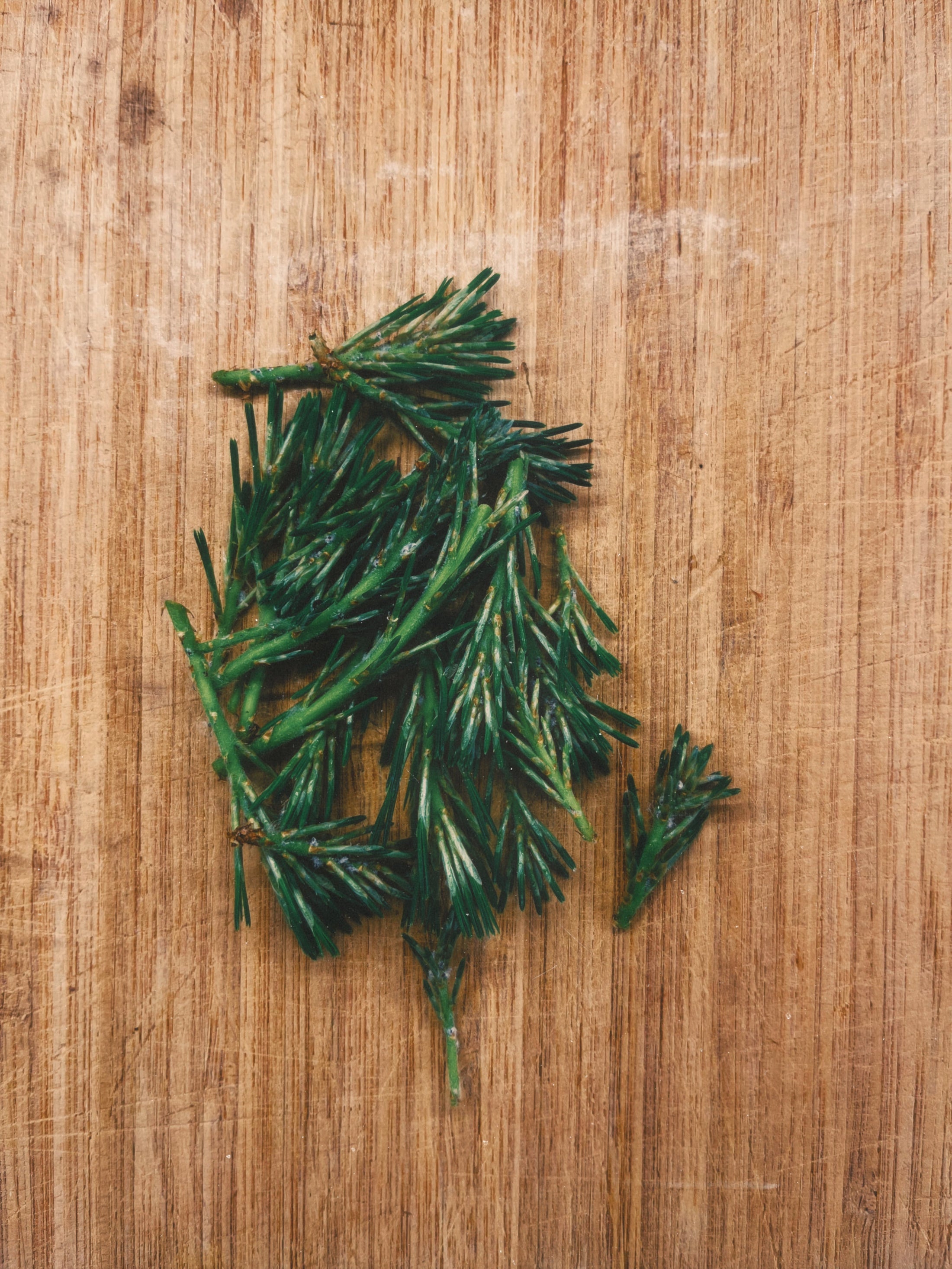
Lodestar Backcountry Provisions began with a simple experiment: I harvested some fresh spruce tips in the spring from the forest, fermented them and made a yeast water with them, and used it to feed my existing sourdough starter.
The starter stayed healthy. It fermented. And it rose more slowly than usual, taking about 8 to 10 hours to peak instead of its usual 6. And it made a good loaf of bread.
That was the proof of concept that I could forage wild yeasts from the forests and places that I love, and use them to make a real backcountry bread.
This started off as an experiment, but really what inspired me was the idea that wild fermentation could become a way of exploring, remembering, and sharing the places that I love that are so often hard to describe.
A cookbook and the forest
The idea started with a cookbook I received for Christmas: Field Notes for Food Adventure (by Brad Leone.
What I loved about the book was how the recipes and ingredients were rooted in Northeastern North America, using seasonal ingredients, wild foods, foraging, fermentation, maple syrup, ramps, and recipes that belong to real landscapes.
That got me looking more closely at the forest around my home, and what I could be foraging each season to create new foods and drinks that were rooted in the wild places around me that I love to explore and experience.
In the spring of 2025, when spruce tips were in season, I started experimenting. I had read about people using spruce tips for different things, so I made spruce tip simple syrup, I candied spruce tips, and I read about spruce beer. I had read about people making yeast water for different purposes including sodas and things, and since I was already baking sourdough regularly, I started wondering what would happen if I made a yeast water from spruce tips and used it in my starter.
I just wanted to see what would happen, whether it would spoil the starter or disrupt the microbial ecosystem that was already established. And, if it worked, I wanted to see how it might change the bread.

Making spruce tip yeast water
The process for making yeast water was straightforward.
I used about two cups of spruce tips in a large mason jar, covered them with water so they were fully immersed, added about half a teaspoon of honey, and let the jar sit for five days.
By the end of the fifth day, the jar had some frothing, a yeasty smell, no obvious contamination, and a bit of residual spruce aroma.
My yeast water smelled great, was clearly active, and so I kept going.

Feeding a sourdough starter with spruce tip yeast water
For the sourdough experiment, I took an existing white flour sourdough starter, made a secondary starter (keeping my mother starter intact) and fed it by replacing the usual filtered water with my spruce tip yeast water.
I used a 1:2:2 feed: 10 grams of starter, 20 grams of yeast water, and 20 grams of flour. I fed it every 12 hours for the first 36 hours, then every 24 hours for two more days.
For flour, I used Red Fife from a local grainery here in Ontario (the same red fife flour that is used in my Ishpatina Wild Yeast Starter).
The experiment was simple: I wanted to know if the yeast water would contaminate the starter, make it behave in any weird way, change the rise time, or alter the strength of the fermentation.
The first answer was reassuring: it did not contaminate the starter. There were no foul smells, no obvious spoilage, and no visible signs that something had gone wrong.
But it did change the way the starter behaved.
Compared with my usual filtered-water feedings, the starter rose more slowly. It was clearly still active, still fermenting, and still usable, it was just slower. It peaked in about 8 to 10 hours instead of its usual 5-6 hours.
The volume rise was comparable between starters.
These changes caught my attention, because with the wild yeast it was clear to me that something had shifted in the microbial ecology of my starter. The wild yeast sourdough starter was behaving differently, in that it was slower, but it was still working as a starter.
The first loaf of wild yeast sourdough, or backcountry bread
After running the feeding experiment for a few days, and gradually extending the time between feeds with the yeast water, I baked with the starter.
The loaf worked.
It had a slightly different flavour than my usual white sourdough. It was a little less sour, though not dramatically different, and definitely not “spruce flavoured.” It was never my goal or expectation that the bread would have a spruce flavour, there’s just not enough spruce being added to the bread through the starter. Really what I wanted was the wild yeast.
Through this experimenting, the behaviour had changed enough that it felt like a real proof of concept.
The starter was not transformed into some pure, untouched “forest yeast” culture. That would not be an honest way to describe it. A sourdough starter is shaped by many things: the flour, the kitchen, the baker’s hands, the feeding schedule, the temperature, and the existing microbial community. I was trying to disrupt this and shape it into what I wanted by incorporating a piece of the forest into my bread.
This experiment was about deliberately bringing wild ingredients and local microbial life into the sourdough process and watching what happened.
Fermentation as a way of experiencing place
The spruce tip yeast water experiment was the result of something that I had been thinking about for a long time.
I spend a lot of time hiking, travelling, and moving through landscapes that are hard to explain properly to anyone who wasn’t there.
Photos and videos get part of it, but they miss the smells, the humidity, the weather, the little details that make a place feel unique.
How do you explain the experience of being in the heat in Bambari in the Central African Republic?
Or the jungles outside of Beni in the Democratic Republic of Congo?
Or the sunrise from the lookouts on Wolf Trail in Gatineau Park when no one else is around?
Or standing on top of Ishpatina Ridge, the highest point in Ontario, after weeks of planning and a day of navigating, biking, and hiking?
Or making coffee on a camp stove at the top of Mt. Carleton, the highest point in New Brunswick, when you are the only person there and the fog parts just as you arrive?
Some places are too rich to be captured by a photographs and videos, alone. They’re rich, sensory and emotional experiences that require something deeper.
This little spruce tip wild yeast sourdough experiment made me wonder whether fermentation could be another way of exploring and capturing those experiences and feelings. I like the idea of finding cool new ways of capturing and sharing moments and experiences, so I got to work creating Lodestar Backcountry Provisions.

From spruce tips to Lodestar
The spruce tips bread experiment was the start of Lodestar Backcountry Provisions.
Lodestar Backcountry Provisions is an experiential goods brand rooted in real Canadian backcountry places. Our first products are dehydrated wild yeast sourdough starters connected to specific landscapes, beginning with Ishpatina Ridge in Northern Ontario.
The idea is simple: some places are worth carrying home.
The cool thing about a sourdough starter is that it is alive. The starter changes, ferments, rises, and responds to care. It is food, but it is also process, memory, patience, and place. Each starter changes and adapts to its environment, beginning with its own microbial ecosystem but then adapting and changing based on what you add to it, and how you care for it. That means that Lodestar’s sourdough starters bring a part of the wilderness home to you, through our wild yeasts, but the starter shifts and becomes your own unique ecosystem as the wild yeasts compete and blend with the yeasts in the air in your home, in your flour, and in your kitchen.
This complex ecosystem that changes and adapts to different places is what made sourdough feel like the right first product for Lodestar.
It gave me a way to connect the backcountry to the kitchen. To turn a place into something people could bake with, tend, share, and remember.
Since that first spruce tip experiment, I have continued working with wild yeast captures and different ways of introducing wild yeasts into sourdough starters. It has been a mixed bag, with plenty of trial and error, but also a lot of success.
I am still experimenting and exploring new areas to launch new sourdough starters with different wild yeasts from backcountry locations in the coming months. There’s so many cool possibilities and lots to learn. Right now I'm working with some fresh pine tips I collected to see how this experiment plays out!
Affiliate Note: This posts contains affiliate links. As an Amazon Associate I earn from qualifying purchases. If you buy through one of these links, Lodestar Backcountry Provisions may receive a small commission at no additional cost to you.
One of the books that helped move this project into existence was Field Notes for Food Adventure. It got me thinking about wild foods, seasonal foraging, fermentation, and cooking as a way of paying closer attention to the places I spend time in. It made me wonder if I could use food as a way to carry a landscape and an adventure home with me. You can purchase Field Notes for Food Adventure through my Amazon affiliate link - it's a great read.