

Kitchen note: September 8, 2026.
By early September, the good cherries are almost gone.
For me, cherries are one of those foods that belong to a season. In summer I can eat them by the bag: juicy, sweet, tart enough to keep things interesting. The cherries available through the rest of the year just aren't the same. The flavour fades. The texture changes. They cost more and somehow feel like less.
We had about a pound left in the fridge, so instead of letting them disappear one handful at a time, I turned them into a small fermentation experiment: a naturally fermented cherry soda made with cherries, sugar and water.
The idea was simple. Give the fruit a little more time. Capture one of my favourite flavours of summer just as the season was ending, and see what fermentation did with it.
The experiment
This is a record of the batch I made, rather than a standardized recipe. Natural fermentation changes with the fruit, the amount of available sugar, temperature and time, so the useful part of the experiment is as much what I'd change next time as what worked this time.
Ingredients
- About 500 g (1 lb) cherries, pitted
- 1 cup granulated sugar
- 8 cups (about 2 L) filtered water
Method
- I put the pitted cherries and sugar into a 4 L glass jar and mashed them together.
- I added about 2 L of filtered water.
- I left the mixture at room temperature for 48 hours. By then, the cherries had risen to the top and there was visible bubbling in the jar.
- I strained out the fruit with a metal strainer, then passed the liquid through a fine mesh strainer.
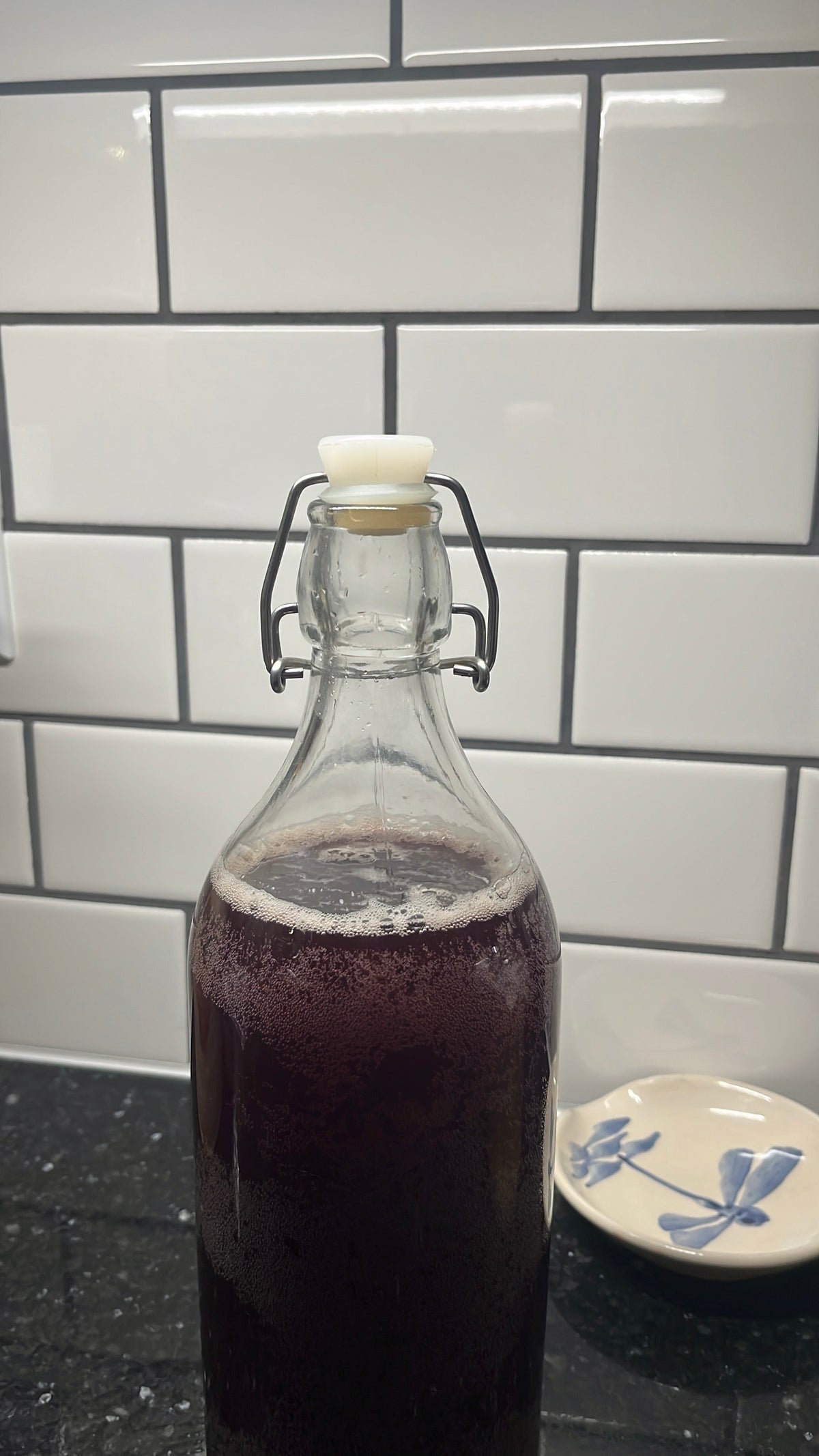
- I divided the liquid between two swing-top glass bottles and moved them to the refrigerator while the carbonation developed, burping the bottles twice a day.
Fermentation note: This is an experimental recipe, not a validated preservation method. Carbonation can build pressure unpredictably, and refrigeration slows fermentation rather than reliably stopping it. If you try something similar, use bottles specifically rated for carbonation, keep them cold once bottled, and open them cautiously.
How it turned out
By September 8, the soda was ready to drink. The carbonation was good: enough fizz to make it feel like a proper soda without the batch feeling over-carbonated.
The flavour was less dialled in. The cherry was there, but the finished drink had a noticeably yeasty edge. For me, that's the most useful result from this first batch. Fermentation time shouldn't be treated as a fixed number. A batch with different cherries, a different sugar level or a warmer or cooler room can move at a different speed and develop a different flavour.
Next time, I'd use the clock as a checkpoint rather than a rule: watch the activity, taste earlier, and move the soda through each stage based on what the batch is actually doing. The goal would be to keep the good natural carbonation while stopping a little earlier, before the fermentation character starts competing with the fresh cherry flavour.
Tools I used
Affiliate note: Some links below are affiliate links. If you buy through them, Lodestar may receive a small commission at no extra cost to you.
- Glass fermentation jars: these aren't the exact jars I use, but they're very similar.
- Fine mesh strainer: this is the one I use.
Mostly, this is what I like about small fermentation projects. A season doesn't have to end all at once. Sometimes you can put a little of it in a jar, change it just enough, and carry the flavour a little farther.
This batch wasn't perfect, but it worked. It turned the last cherries in the fridge into something new, gave me a good bottle of end-of-summer fizz, and left a clear question to test with the next batch.